Alexander Technique — Lessons
We were born perfect. Watch a baby — no one teaches it to move, to reach, to stand. It already knows.
Air, gravity, space — they have been taking care of us since that first moment. But we can't see them. So we forget.
And when we forget, we start doing it all by ourselves. A little extra effort when we play. When we speak. When we stand before someone. It's always there, that bit of unnecessary work.
The Alexander Technique is not about learning something new. It's about stopping what you don't need. When you stop, something that was always there comes back.
In a lesson, I place my hands on you. Not to fix anything. Not to move you toward a "correct" posture. I am simply with you. In that, a space opens — and your body remembers what it already knows.
You may feel lighter. Your breath may change. You may feel taller, wider — not because something was added, but because something was taken away.
Afterward you might wonder, "What just happened?" Nothing happened. What was always yours simply returned.
How it began
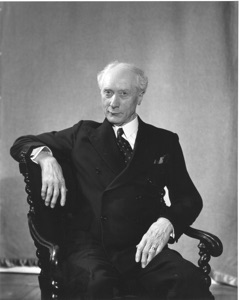
F.M. Alexander was an actor. One day, his voice failed him on stage. Rest would restore it, but as soon as he performed, it would fail again. Doctors could not find the cause.
He asked himself: "Am I doing something unnecessary on stage?"
Observing himself in a mirror, he noticed that when he began to recite, he unconsciously pulled his head back. He tried to stop it by force, but it didn't work. After years of trial and error — when he finally gave up and stopped doing anything — change happened.
His voice returned. He returned to the stage. People, astonished by his transformation, began asking him for lessons.
"When you do nothing, something else takes care of you."
— This is where the Alexander Technique begins.
Who can benefit
• Those experiencing physical discomfort (back pain, headaches, repetitive strain, etc.)
• Those who feel tense, tire easily, or have difficulty speaking in public
• Musicians, singers, dancers, actors, and other performing artists
• Athletes (including those experiencing the yips)
• Therapists, bodyworkers, and teachers — anyone who works with people through touch
• Those who have read about the Alexander Technique but found it hard to understand, or who have tried other teachers without connecting
The Alexander Technique is a required subject in many music conservatories and drama schools worldwide. In some countries, it is covered by health insurance for the treatment and prevention of back pain.
Notable people who have had lessons
Musicians: Sting, Paul McCartney, Yehudi Menuhin
Actors: Patrick Stewart, Keanu Reeves
Thinkers and writers: John Dewey, Aldous Huxley, George Bernard Shaw
Nobel laureate: Nikolaas Tinbergen (Physiology or Medicine)
Fees
Kawasaki, Kanagawa
First lesson (60 min): ¥7,500
Follow-up (40 min): ¥6,500
Kajigaya Station (Tokyu Den-en-toshi Line), 15 min walk. 21 min from Shibuya.
Isumi, Chiba
First lesson (60 min): ¥6,500
Follow-up (40 min): ¥5,500
Near Taito Station (JR Sotobo Line). Approx. 90 min from Tokyo Station.
Lessons are also available nationwide and internationally. Workshops available on request.
(Cancellations: 50% charge up to the day before; 100% on the day of the lesson.)
Testimonials
"Dear Ken Kaizu For decades I have certified almost 400 Alexander Technique teachers in Europe. Most of them felt commitment and appreciation for this art. Ken, in our joint work in recent years we have discovered together additional values to the core principles of the technique - honor and love. These are the values that Alexander did not call by name but they are the music in the background to those principles. You have embraced the spirit of the Japanese bow in your approach to the student. It is a bow that speaks and listens at the same time and is not related to the state of the body. We experienced the teacher and the student together, and we exchanged roles. Your Teacher-Student, Yehuda"
— Yehuda Kuperman
Graduated under Patrick Macdonald (direct student of F.M. Alexander) in 1967
Certified close to 400 teachers across Europe. Based in Israel.
"After his graduation, Ken enrolled for a post-graduate term at my school — The Alexander Technique School, Queen’s Park, in London. We all enjoyed his enthusiasm and quality of work. Ken is very open and has a deep wish to expand his experience of the technique. He is a very good listener, and has a very creative approach to teaching."
— Ilana Machover
Alexander Technique teacher at the Royal Academy of Music, London (since 1984). Honorary Member of the Royal Academy of Music. Runs a teacher training course in London.
Book a Lesson
Please contact: ken@thesounder.net